

When you’re installing landscaping, retaining walls can provide necessary support. They hold soil on slopes, prevent erosion, and protect your home’s foundation against flooding. They can ensure adequate drainage and stop water from building up.
All these benefits are possible with a retaining wall, but the hefty price tag makes it out of reach for some homeowners. Consider these tips for installing a retaining wall without breaking the bank.
Reduce Permit Requirements and Costs
The height of the retaining wall determines what permits you need for its installation. For example, if the retaining wall is taller than 4 feet, most local building codes require a construction permit and engineer-stamped plans. An easy way to save is to install a retaining wall no taller than 4 feet, so you will need only a zoning permit for the build.
Choose Affordable Materials
Opting for more cost-effective materials can help. Pressure-treated timber is a low-cost, lightweight choice that doesn’t require a lot of specialized tools for installation. This material can last up to 10 years and has a rustic look.
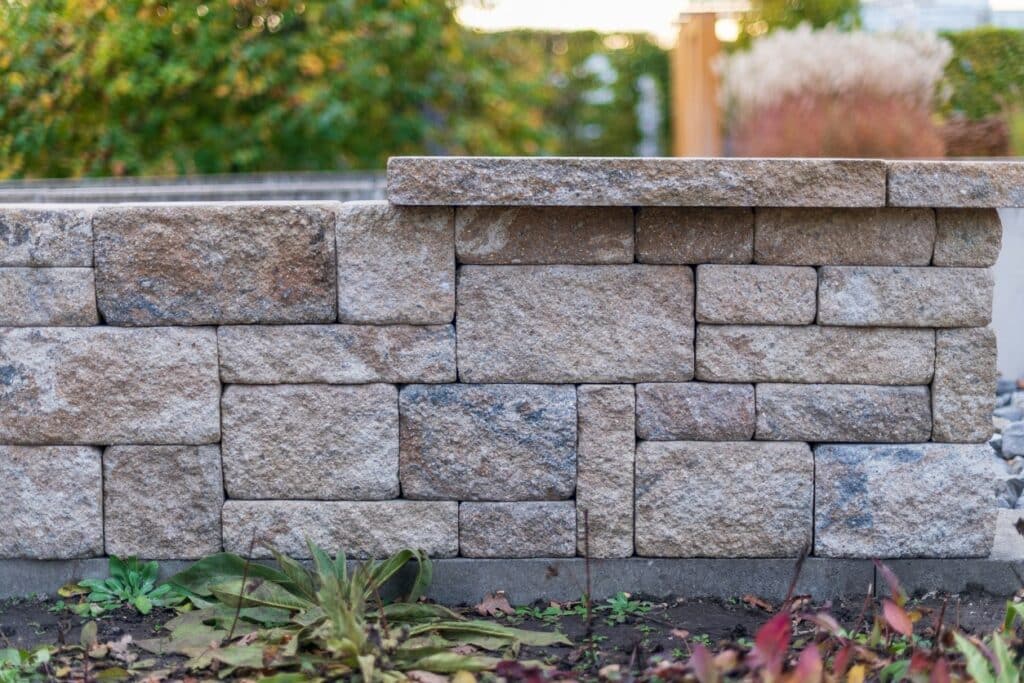
Concrete blocks are durable, inexpensive, and easy to install. While they lack the natural look of wood, they are strong and withstand severe weather well. Other options include river rocks and gabion baskets. Landscapers can also use salvaged stone to lower costs.
Solid Compacted Gravel Bases
Use a solid compacted gravel base to cut both up-front and long-term costs. These gravel bases offer stability, manage water pressure, and give the retaining wall a stronger foundation. They also reduce the installation time.
Solid compacted gravel bases can distribute the weight of the wall and soil evenly. They can reduce shifting and sinking over time, prevent soil instability, and allow proper water drainage.
Use Perforated Pipe or Geotextile Fabric for Proper Drainage
The drainage design can increase the up-front and long-term cost of your retaining wall. If you choose perforated pipe or geotextile fabrics, you’ll save more. First, these options stop soil infiltration. They can also maintain proper water flow, prevent clogs, and decrease hydrostatic pressure.
You’ll gain a retaining wall that can last beyond 10 years, and you’ll have minimal maintenance costs. These drainage choices can also prevent the honeycomb effect and secure your retaining wall.
Book the Installation During Non-Peak Seasons
Non-peak seasons like fall and early winter can offer savings. It’s best to get a retaining wall between September and November to save the most on the installation. Retaining wall installations during peak seasons are more costly because contractors have busier schedules and greater demands for services.
Retaining walls offer support, protecting your landscaping and property. They can prevent soil erosion and foundation flooding. These landscaping installations can significantly increase your property values and help you achieve a higher selling price. If you want a professionally installed retaining wall, contact us at Princeton Turf Care in Lawrence Township, NJ.